
Embodied AI Robotics Prompts: Designing the Future of Humanoids
A [Robot Type] with a [Material] chassis and [Design Style] aesthetics, performing the action of [Action] within a [Environment]. The robot's intelligence is conveyed through its [Expressive Feature, e.g., optical sensors, posture]. The scene is captured in a [Photography/Art Style] with [Lighting Condition], highlighting [Key Detail]. --ar [Aspect Ratio] --v 6.0
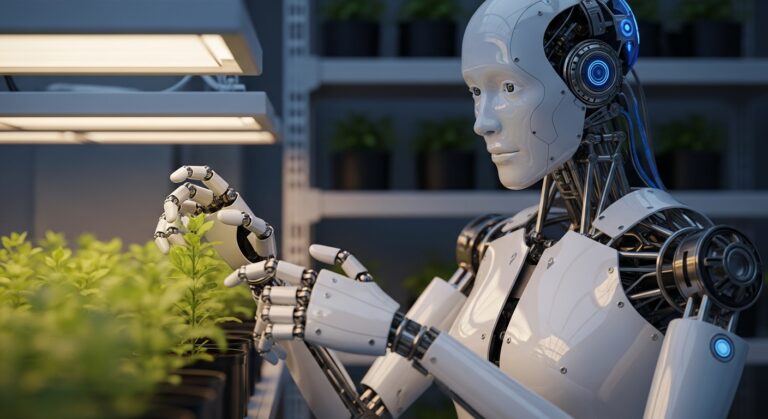
Examples
A few example prompts to help you see how this prompt can be used.
Prompt Example
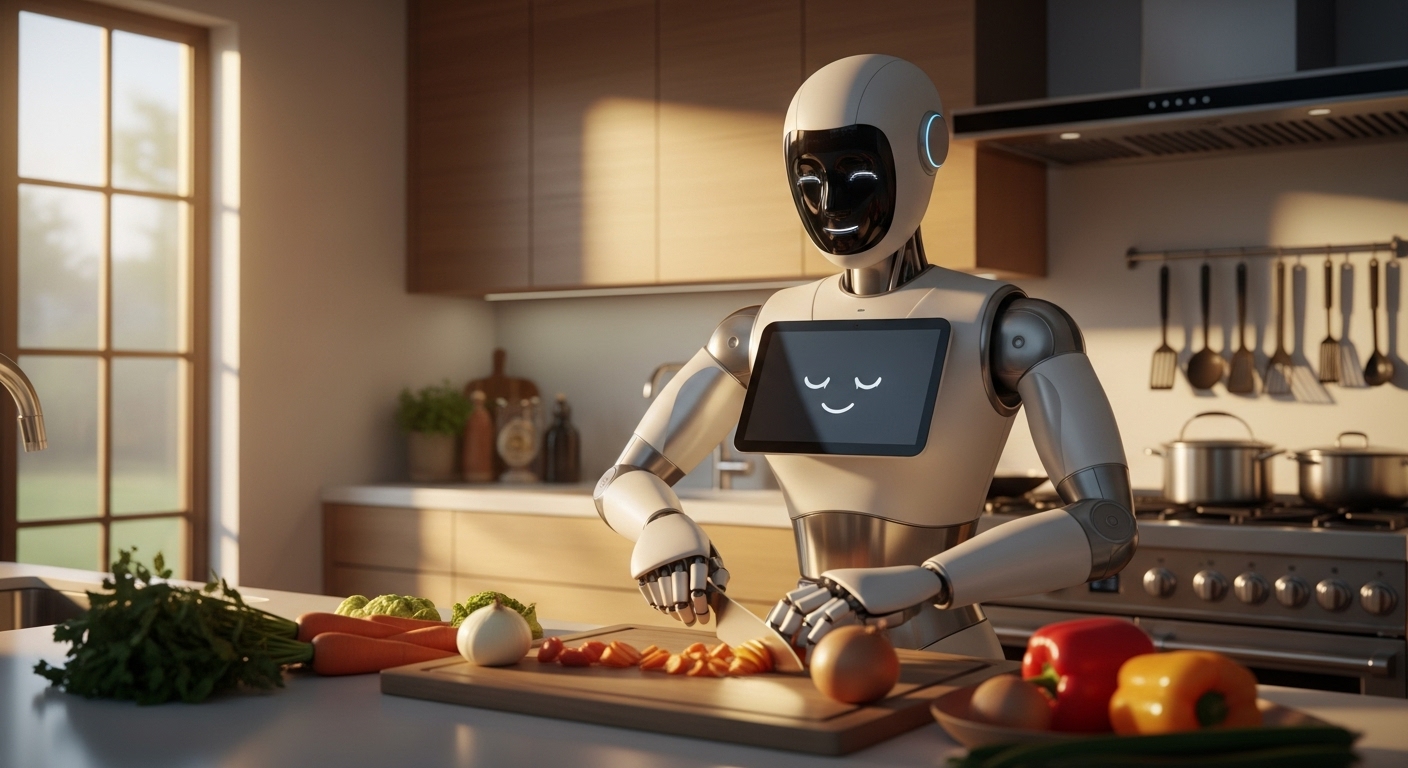
A friendly, domestic assistant humanoid robot made of soft-touch matte white silicone and brushed aluminum, carefully preparing a meal in a modern, sunlit kitchen. Its face is a simple, expressive LED screen showing a content smile. The style is a clean, photorealistic shot, with warm morning light streaming through a window, highlighting the steam rising from a pot. --ar 16:9
Prompt Example
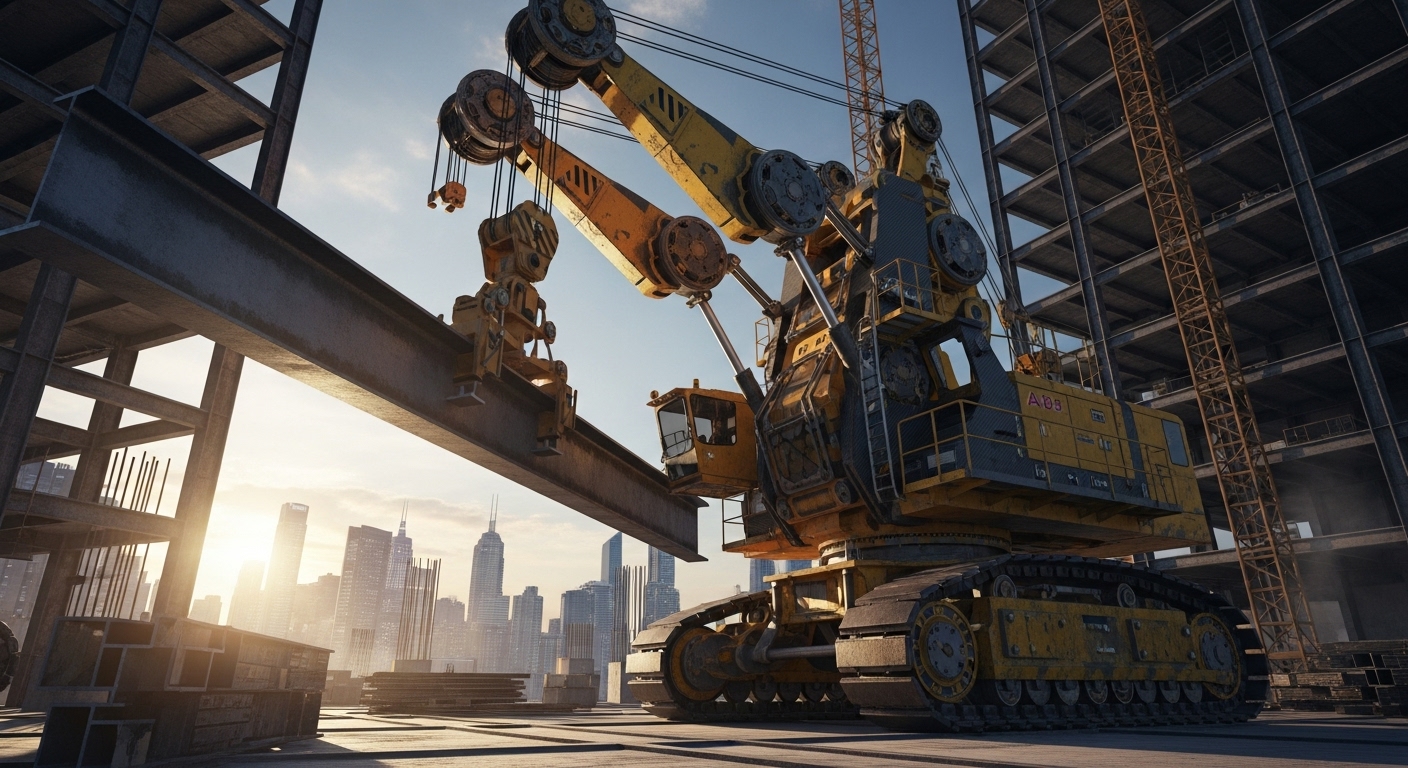
A rugged, industrial construction bot made from weathered yellow steel and reinforced carbon fiber. It's lifting a heavy steel beam on a high-rise construction site at dawn. The robot's design is purely functional, with powerful hydraulics and no face. The scene is a wide-angle shot with dramatic, low-angle lighting from the rising sun, capturing dust motes in the air. --ar 3:2
Prompt Example
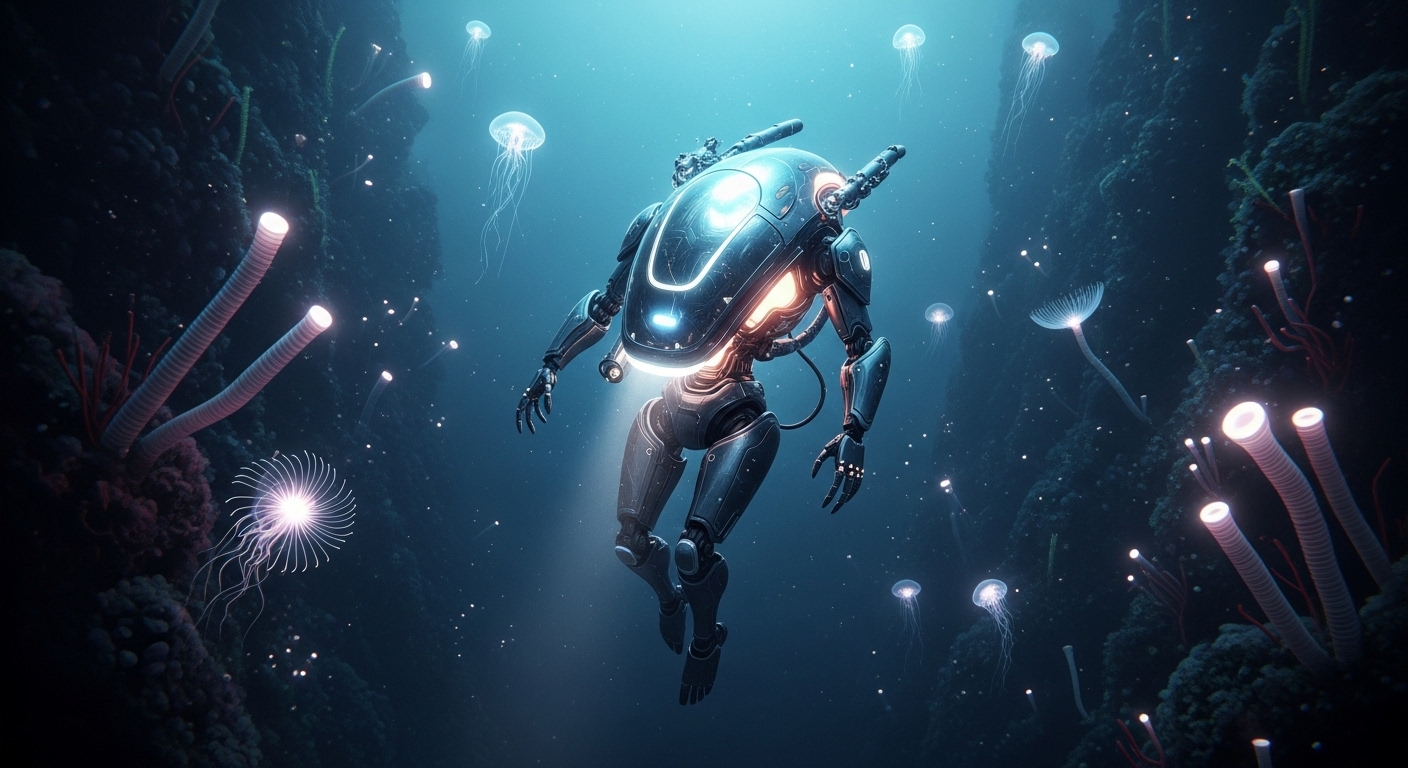
An elegant, bio-integrated AI agent designed for deep-sea exploration. Its body is a sleek, bioluminescent, semi-translucent material, mimicking a jellyfish. It's navigating a dark abyssal trench, surrounded by glowing sea creatures. The style is dark and ethereal, with the only light sources being the robot's own bioluminescence and the surrounding fauna. --ar 16:9
Prompt Example
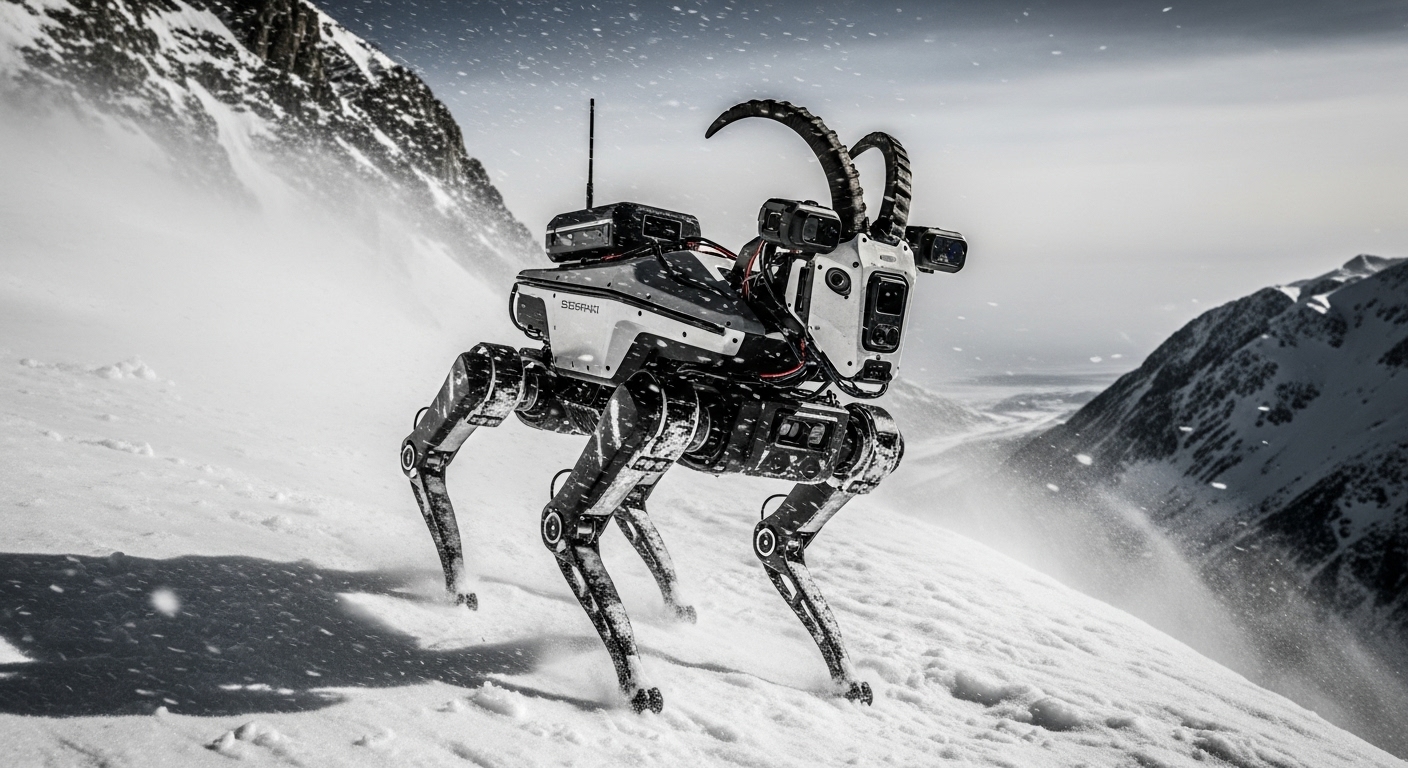
A concept for a search-and-rescue physical AI that is quadrupedal, inspired by a mountain goat. It has a lightweight but durable chassis and advanced sensors. It is shown carefully navigating a treacherous, rocky mountain pass during a snowstorm. The style is a gritty, realistic photojournalistic shot, conveying a sense of urgency and harsh conditions. --ar 4:3
Prompt Example
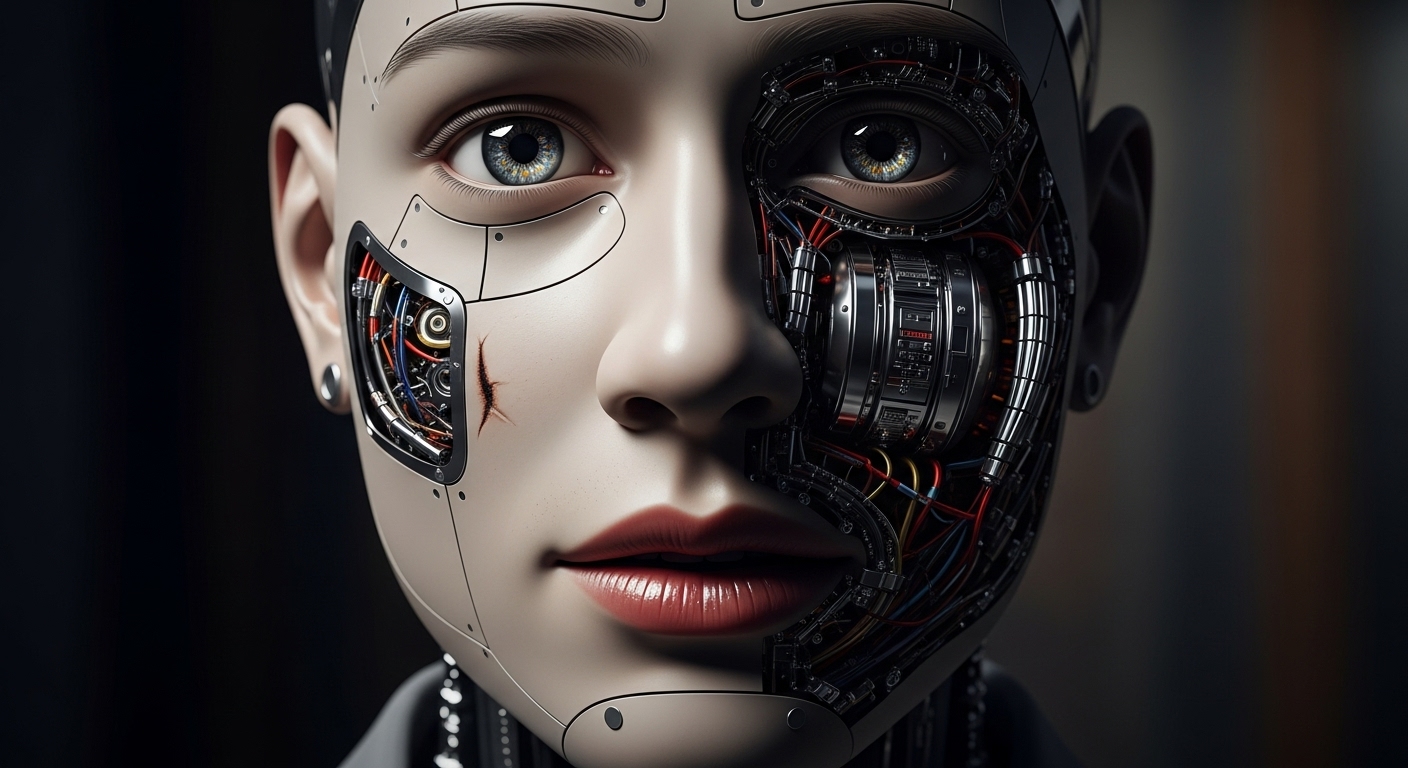
A close-up portrait of a futuristic humanoid robot with hyper-realistic synthetic skin and expressive, lifelike eyes. It is looking directly at the viewer with an expression of deep thought and curiosity. The lighting is soft and artistic, similar to a Rembrandt portrait, creating strong chiaroscuro effects on its face and metallic sub-structure visible through a small tear on its cheek. --ar 1:1
Use Cases & Tips
Conceptualizing the Next Wave of Robotics and AI
The field of embodied AI robotics is where digital intelligence meets the physical world. Use these prompts to explore and visualize concepts that are shaping our future. Whether you’re a concept artist, a robotics enthusiast, or a writer, these prompts will help you create compelling imagery.
- Product Design & Prototyping: Generate a photorealistic humanoid robot design for various industries. Visualize how a new medical assistant or a construction bot would look and function. This is a great way to answer the question of how to design an AI robot concept before any physical work begins.
- Sci-Fi World-Building: Create a diverse cast of robotic characters for your story or game. Show an advanced AI agent navigating a bustling futuristic city or a lone android exploring a desolate alien planet. These prompts allow you to visualize the future of AI in humanoid robotics in rich detail.
- Simulating Interactions: A key aspect of physical AI is interaction. Craft prompts that show an AI robot interacting with environment, such as a bot tending to a garden, assisting an elderly person, or learning a new skill by observing its surroundings. This demonstrates a higher level of robot intelligence.
Tips for Better Embodied AI Prompts
- Specify the Function: Is the robot a caregiver, a warrior, an explorer, or an artist? Its function will heavily influence its design, materials, and posture.
- Describe the Materials: Use descriptive words like ‘brushed aluminum’, ‘polished chrome’, ‘carbon fiber composite’, ‘soft-touch silicone’, or even ‘bio-synthetic muscle fiber’ to give your creation texture and realism.
- Focus on the ‘Embodied’ Aspect: Emphasize how the AI’s intelligence is physically represented. Does it have expressive optical sensors? Does its body language convey emotion or intent? Explore these details for more dynamic results. Check out our embodied AI robotics prompt examples below for inspiration.
Frequently Asked Questions
Q1. What details are important for a good embodied AI robotics prompt?
To create a great prompt, focus on three things: function (what it does), form (what it looks like), and environment. Specify its purpose (e.g., medical assistant, explorer), describe its materials (e.g., carbon fiber, silicone), and place it in a vivid setting. This provides the AI with enough context to generate a detailed and coherent image.
Q2. How can I create a photorealistic humanoid robot design using AI?
For photorealism, use keywords from photography. Specify camera shots (e.g., 'close-up portrait', 'wide-angle shot'), lighting ('soft studio lighting', 'dramatic sunlight'), and lens effects ('depth of field', 'bokeh'). Also, describe materials with realistic textures like 'brushed metal', 'scratched paint', and 'synthetic skin with pores'.
Q3. How do I show an AI robot interacting with its environment in a prompt?
Focus on verbs and actions. Instead of 'a robot in a garden,' try 'a robot gently pruning a rose bush with delicate metallic fingers.' This shows the AI robot interacting with the environment directly. Mentioning the robot's reaction, like 'its optical sensors glowing with analytical data,' adds another layer of intelligent interaction.
Q4. What is the difference between a robot and a physical AI agent in a prompt?
While related, a 'robot' prompt might focus on mechanical design and function. A 'physical AI agent' prompt emphasizes intelligence and autonomy. When prompting for an AI agent, try to include details about how it perceives, learns from, or adapts to its environment, showcasing its advanced robot intelligence.
Q5. How can I visualize the future of AI in humanoid robotics through art?
Think about the roles robots might play. Imagine a future where they are companions, artists, scientists, or caretakers. Create prompts that explore these concepts. For example, 'An AI humanoid robot comforting a crying child in a hospital' or 'Two AI agents collaborating to build a complex structure on Mars.' These narratives help visualize the potential future of robotics and AI.
Q6. Can you provide some embodied AI robotics prompt examples for beginners?
Certainly! Start simple. Try: 'A sleek, chrome humanoid robot serving drinks in a futuristic bar, neon lights reflecting on its surface.' Or 'A small, friendly robot with caterpillar tracks watering plants in a greenhouse.' These prompts have a clear subject, action, and environment, making them great starting points.